
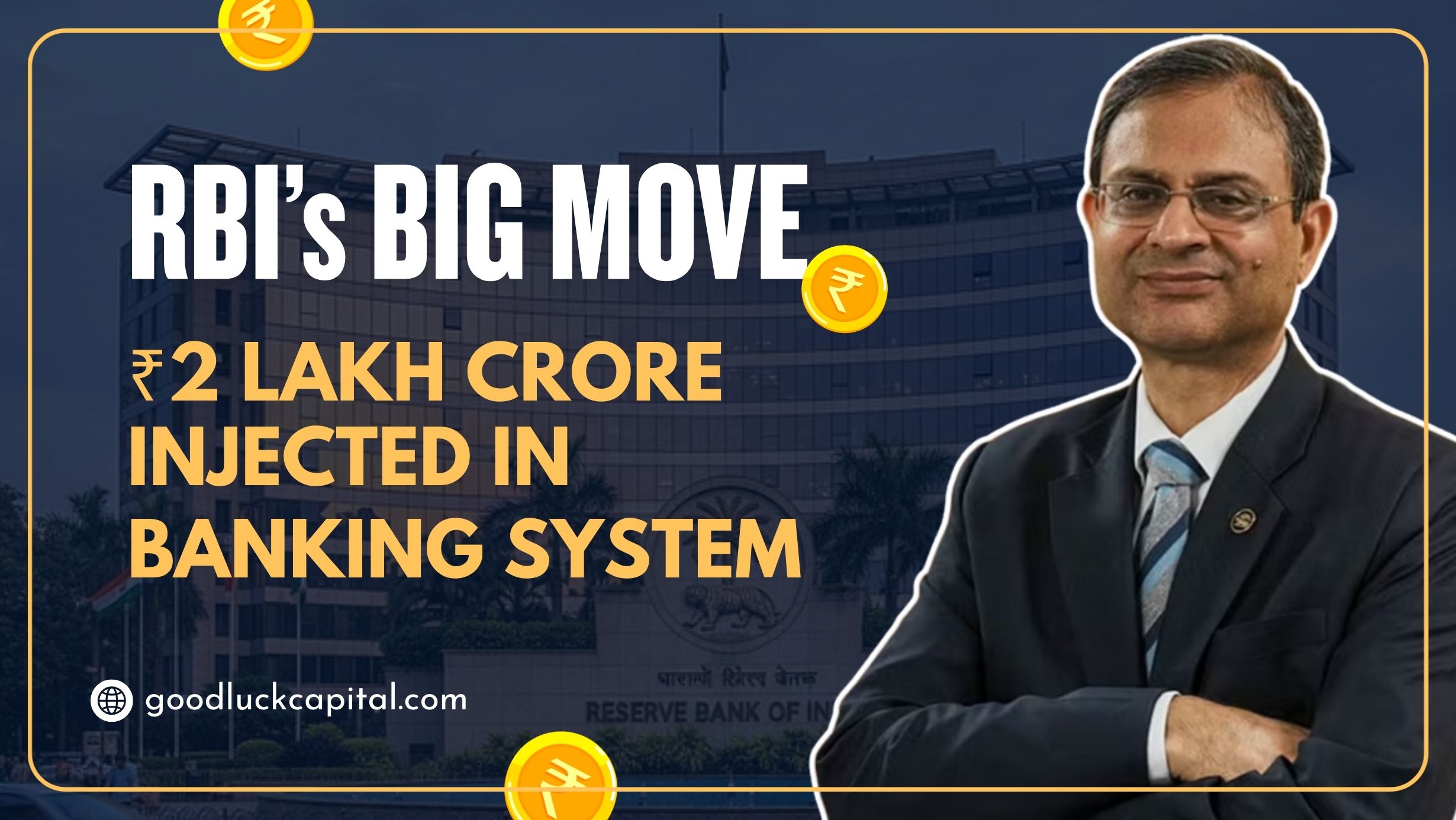
When the Reserve Bank of India (RBI) announced a liquidity infusion of over ₹2 lakh crore on January 23, 2026, it wasn’t just another policy headline. It was a clear signal: liquidity in the system was getting tight, and RBI wasn’t going to wait for things to break.
This move comes at a time when banks are under pressure, bond yields are rising, and the rupee is facing sustained weakness. Let’s break down what RBI did, why it had to act, and what this means for markets, borrowers, and investors.
First Things First: Why Liquidity Is So Important
Think of liquidity as the oxygen of the banking system. Banks may look healthy on paper, but if they don’t have enough cash on hand, problems start surfacing quickly.
Over the past year, Indian banks have been lending aggressively. Credit growth has been strong, but deposit growth hasn’t kept pace. That gap creates stress. When liquidity tightens, banks become cautious, loan rates stay high, and RBI’s policy rate cuts fail to reach the real economy.
In short: no liquidity, no growth.
What Forced RBI’s Hand?
Pressure on the Rupee
The rupee has been hovering near historic lows, around ₹92 to the dollar. Global rate uncertainty, capital outflows, and external deficits have kept the currency under pressure. To smooth volatility, RBI stepped into the forex market—selling dollars and absorbing rupees in the process.
Banking System Stress
Banks have lent heavily over the last few quarters. While that’s good for growth, it also means cash buffers are thinner. Liquidity coverage ratios were coming under strain, making it harder for banks to expand lending further—something investors closely watch while evaluating positional stock tips in India, especially in the banking and NBFC space.
Rising Bond Yields
Government bond yields have moved higher, reflecting tight liquidity and inflation concerns. Higher yields raise borrowing costs for everyone—from the government to corporates to retail borrowers.
Put together, the system was flashing early warning signs. RBI decided to act before stress turned into a slowdown.
How RBI Injected ₹2 Lakh Crore into the System
Instead of relying on a single tool, RBI used a mix of short-term and long-term liquidity measures.
1. Open Market Operations (OMO)
RBI will buy government bonds worth ₹1 lakh crore from the market. When RBI buys bonds, banks receive cash. This directly increases liquidity and pushes bond yields lower.
Lower bond yields usually translate into lower borrowing costs across the economy, which is exactly what RBI wants.
2. Forex Swap Operations
RBI is also conducting a 3-year dollar-rupee swap worth roughly another ₹1 lakh crore.
In simple terms, banks give dollars to RBI and receive rupees in return. After three years, the deal reverses. This provides durable rupee liquidity without permanently reducing India’s forex reserves—a smart and globally accepted approach.
It also reduces the need for aggressive dollar selling, which helps stabilize the rupee.
3. Variable Rate Repo (VRR)
For short-term needs, RBI is offering liquidity through VRR auctions. Banks bid for funds based on interest rates, ensuring money goes where it’s genuinely needed. This helps manage temporary mismatches without distorting the broader rate structure.
How This Flows Into the Economy
Once banks receive liquidity, the transmission begins.
Banks feel more comfortable lending. Funding costs ease. Competition increases. Over time, lending rates—whether home loans, corporate loans, or working capital—start moving down.
This environment typically supports cyclical sectors and creates opportunities that short-term stock advisors in India often track during liquidity-driven market phases.
What This Means for Markets
Bond Market
RBI’s bond purchases reduce supply in the market and increase demand, pushing prices up and yields down. Falling government bond yields often pull down corporate bond yields as well.
Currency Market
Forex swaps help stabilize the rupee without draining reserves. More importantly, they signal RBI’s commitment to currency stability, which calms market nerves.
Equity Market
Liquidity is generally positive for equities. Lower interest rates support valuations, improve earnings outlooks, and boost investor sentiment—especially in rate-sensitive sectors like banks, real estate, and capital goods.
Are There Any Risks?
Yes, and RBI knows this.
Too much liquidity can fuel inflation if demand accelerates too quickly. Excess money can also inflate asset prices if it chases limited opportunities. And liquidity alone cannot revive growth if businesses and consumers remain cautious.
That’s why this move is best seen as supportive, not a silver bullet.
The Bottom Line
RBI’s ₹2 lakh crore liquidity infusion is a timely and well-calibrated response to tightening financial conditions. It addresses immediate stress, supports the rupee, and creates room for lower interest rates.
For investors, the message is clear:
RBI is proactive, growth-supportive, and ready to step in when liquidity tightens.
The real test will be the next few months—whether this liquidity translates into stronger credit growth, easing rates, and sustained economic momentum.
For now, the central bank has done its part. The baton is with banks, borrowers, and policymakers.