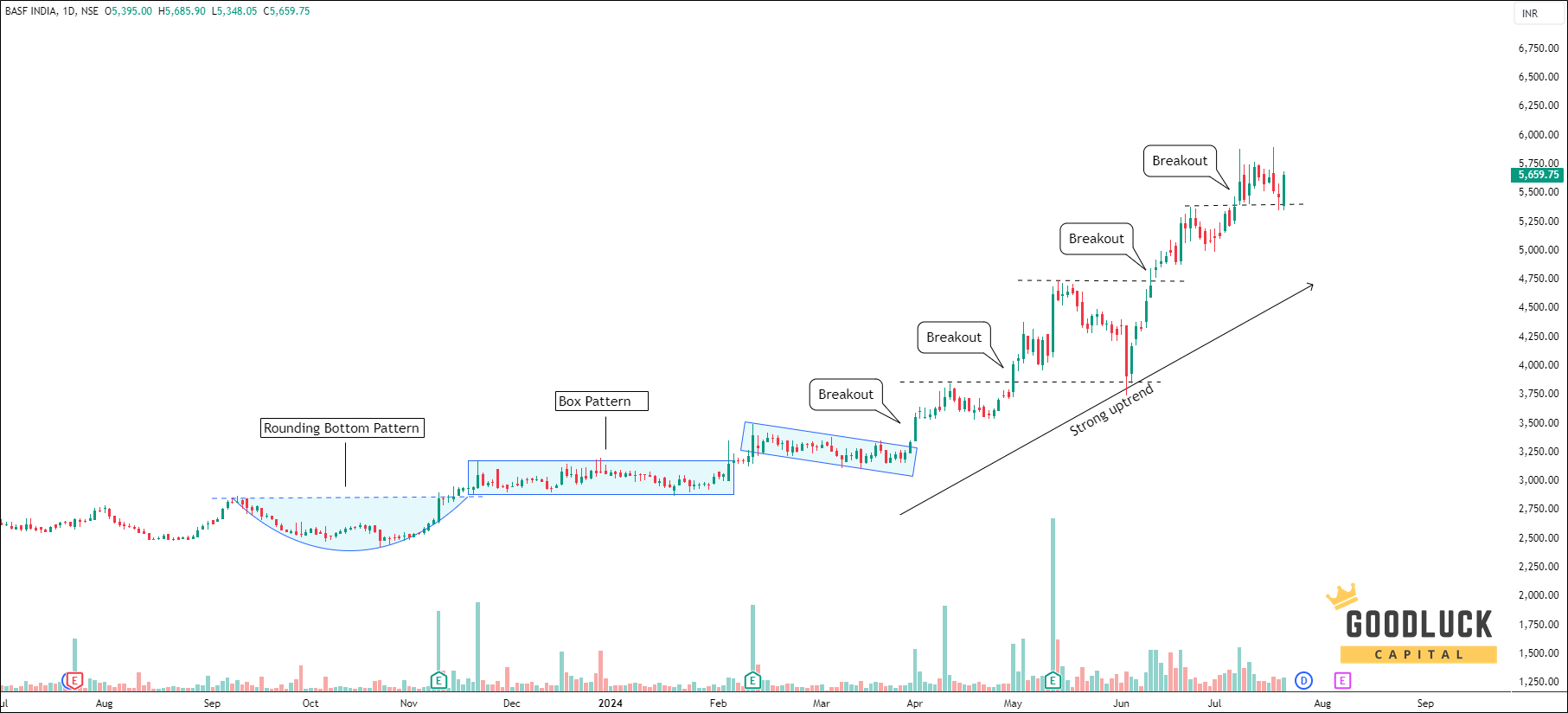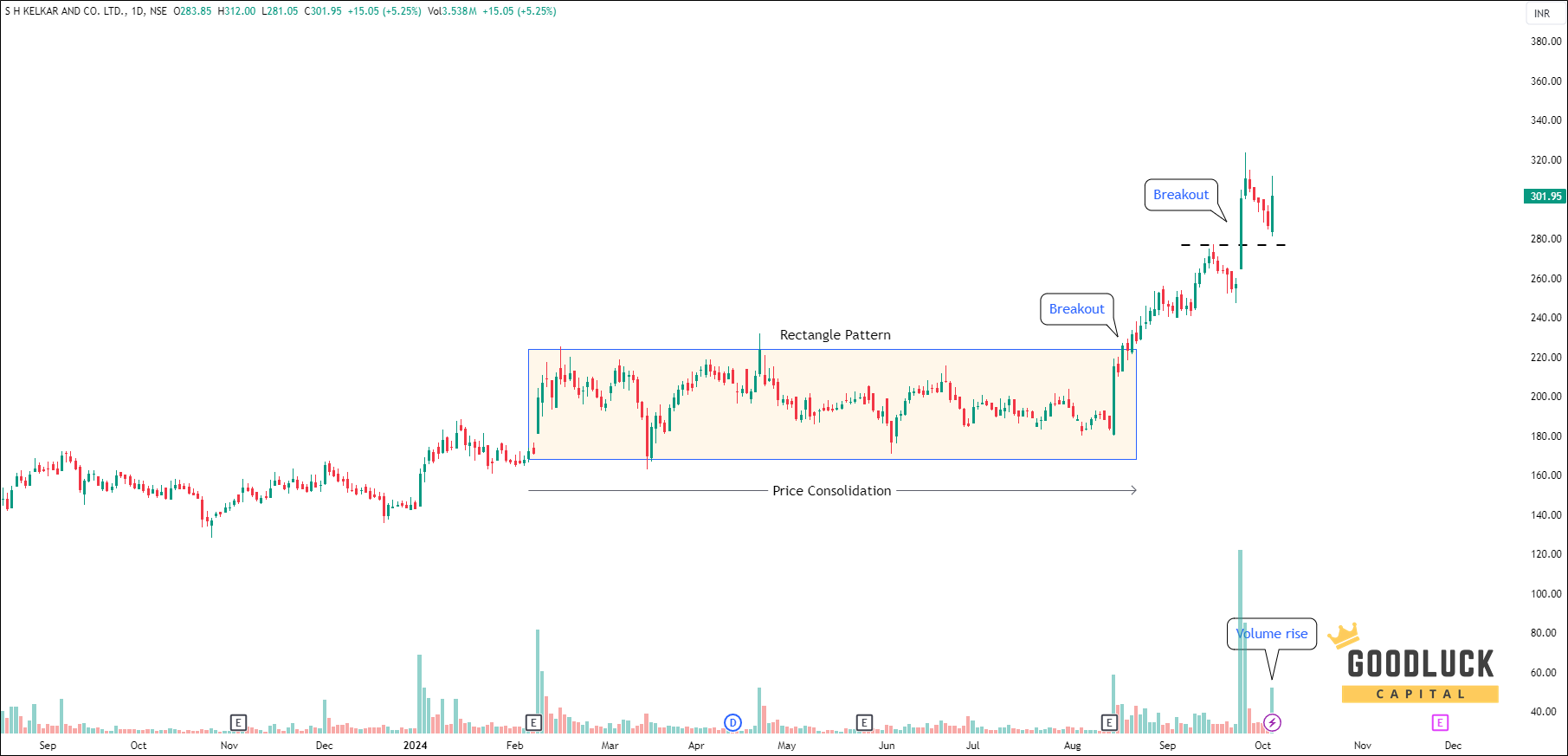
The Nifty slips 3% in a week. Your WhatsApp group lights up with one message: “Buy the dip!” A cousin is already placing orders.
But what does that phrase actually mean? And is it as smart as it sounds? Let’s break it down.
For investors exploring the market or following a positional stock trading advisor in India, understanding when a price fall presents an opportunity and when it signals deeper trouble is an important part of making informed decisions.
What Does “Buy the Dip” Mean?
“Buy the dip” means buying an investment after its price has fallen, hoping it will recover so you can profit from the bounce. The “dip” is simply a drop in price that you expect to be temporary.
Think of a Diwali sale. A phone you wanted drops from ₹30,000 to ₹24,000, and it feels like a bargain. But a discount only matters if the phone is actually worth the original price. If the phone is faulty, the sale price isn’t a deal. It’s a warning.
Buying the dip works exactly the same way.
Why Investors Like This Idea
- A lower price means a lower cost. Buying after a fall can mean paying less per share than you would have a few weeks earlier.
- Markets have often bounced back. Over long periods, broad indexes like the Nifty 50 have often recovered from big falls. How long that takes varies, and nothing is guaranteed.
- It gives you a plan. Instead of freezing in fear when prices drop, you have something to do.
When Buying the Dip Can Work
It tends to work best when a few things line up:
- The whole market is falling on fear, such as global worries or a scare over interest rates, rather than because of one company’s trouble.
- You’re buying a broad index fund or a strong, well-run business.
- You have a long time horizon, ideally many years.
- You’re using money you won’t need soon.
When It Goes Wrong
The risky version has a name: catching a falling knife.
- The dip may not be a dip. If a company’s business is weakening, its stock can keep falling. A cheaper price can still be an expensive mistake.
- The old price may have been too high. A stock that falls 40% from a peak hasn’t necessarily become cheap. The peak may simply have been inflated.
- Nobody can call the bottom. Put all your money in on day one, and a 10% dip can easily turn into a 20% one.
- Borrowed money makes it worse. Using leverage, including in futures and options, can magnify losses fast.
Two Investors, Two Dips
Let’s imagine two investors who both see the market fall.
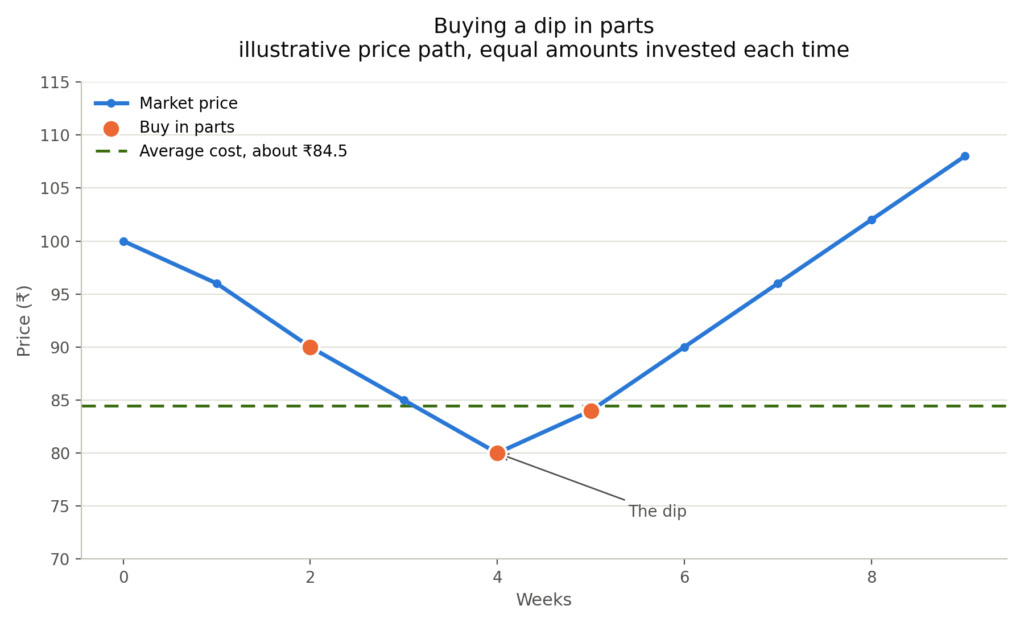
Riya buys a Nifty 50 index fund in three parts over several weeks. She also keeps her monthly SIP running. The money is meant for goals at least seven years away.
Karan puts all his savings into a single stock that is down 40%. The company’s profits have been shrinking for a year. And the money was meant for a house down payment next year.
| Factor | Riya | Karan |
|---|---|---|
| What she or he bought | A broad index fund | One falling stock |
| How the money went in | In three parts | All at once |
| Why it fell | A market-wide dip | The business is weakening |
| Time horizon | Seven years or more | About one year |
Both “bought the dip.” Only one had a plan.
The SIP: Buying the Dip on Autopilot
If you invest through a SIP, you’re already doing a gentle version of this. A SIP invests a fixed amount every month. When prices fall, the same money buys more units. When prices rise, it buys fewer.
Here’s a simple example with a ₹5,000 monthly SIP:
| Month | Fund price (NAV) | Units bought |
|---|---|---|
| 1 | ₹ 100 | 50 |
| 2 | ₹ 80 | 62.5 |
| 3 | ₹ 125 | 40 |
After three months, you’ve invested ₹15,000 and own 152.5 units. Your average cost is about ₹98.4 per unit, a little lower than the average price of about ₹101.7.
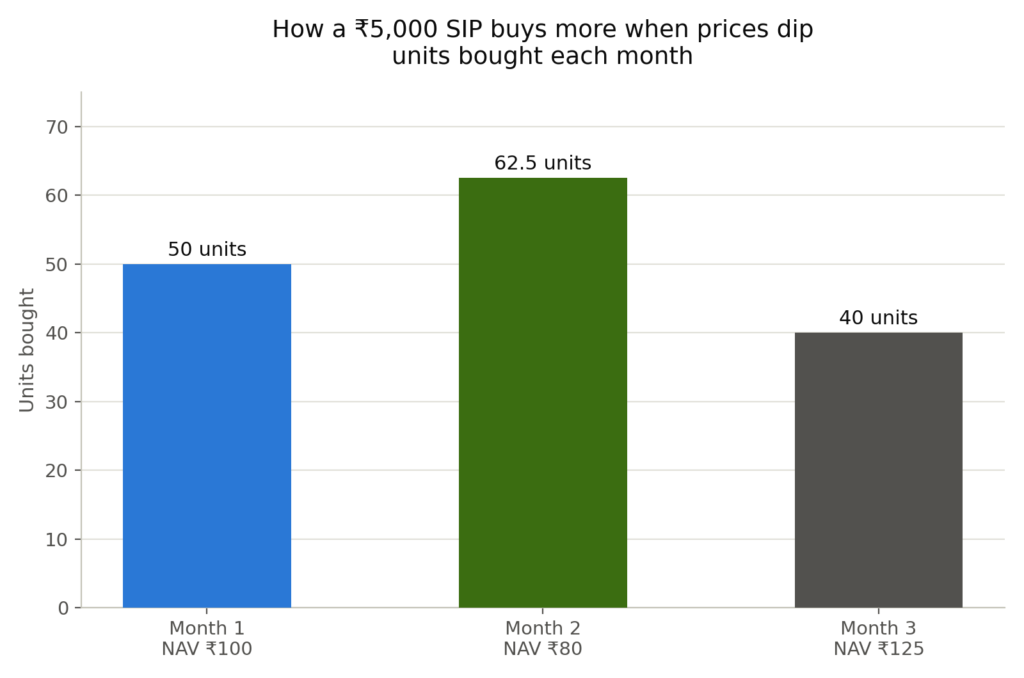
This doesn’t guarantee a profit. But it shows how steady investing lets dips work in your favor without you having to guess the bottom.
How to Buy the Dip More Smartly
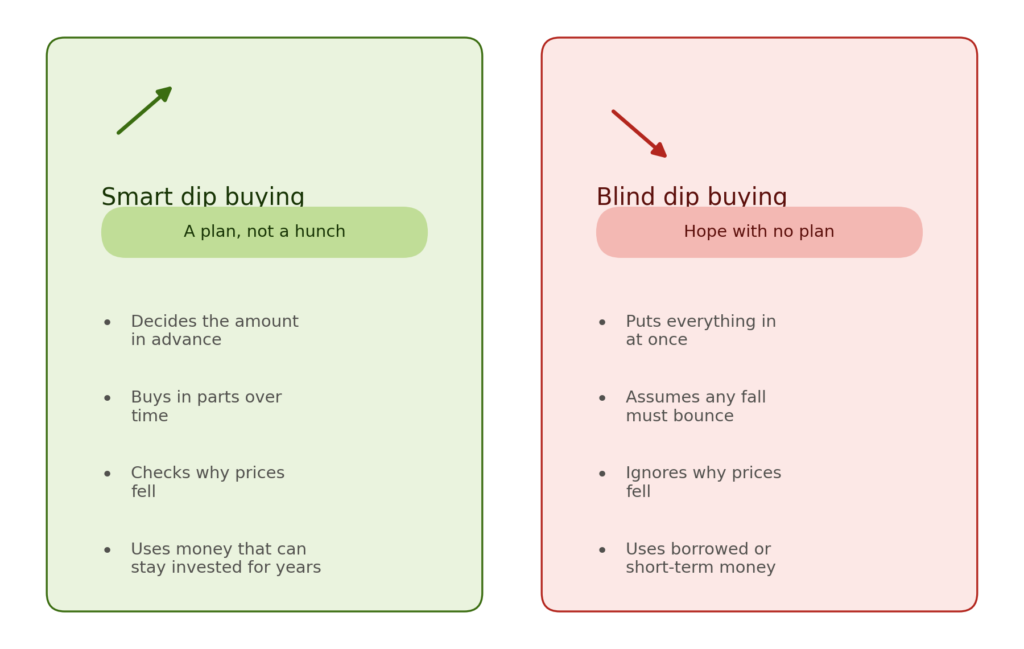
- Plan before the dip arrives. Decide in advance how much you’d invest, and set that money aside.
- Buy in parts. Spreading purchases over time protects you if prices keep falling.
- Ask why it fell. A market-wide scare is very different from a company in trouble.
- Prefer broad or quality investments. Index funds and strong businesses have a better record of recovering than weak ones.
- Use only money you can leave alone. Never invest money you’ll need soon, and avoid borrowing to invest.
For those exploring short term trading ideas, the same principle applies: look beyond a falling price and assess the stock’s trend, support levels, potential upside, and downside risk before entering a trade.
Conclusion
A dip is just a sale sign. The real question is whether the shop is worth buying from.
“Buy the dip” works when you’re buying something good, at a sensible pace, with money and time on your side. It fails when the only thing you’re buying is the hope that a falling price must bounce. Check what you’re buying before you check the discount.