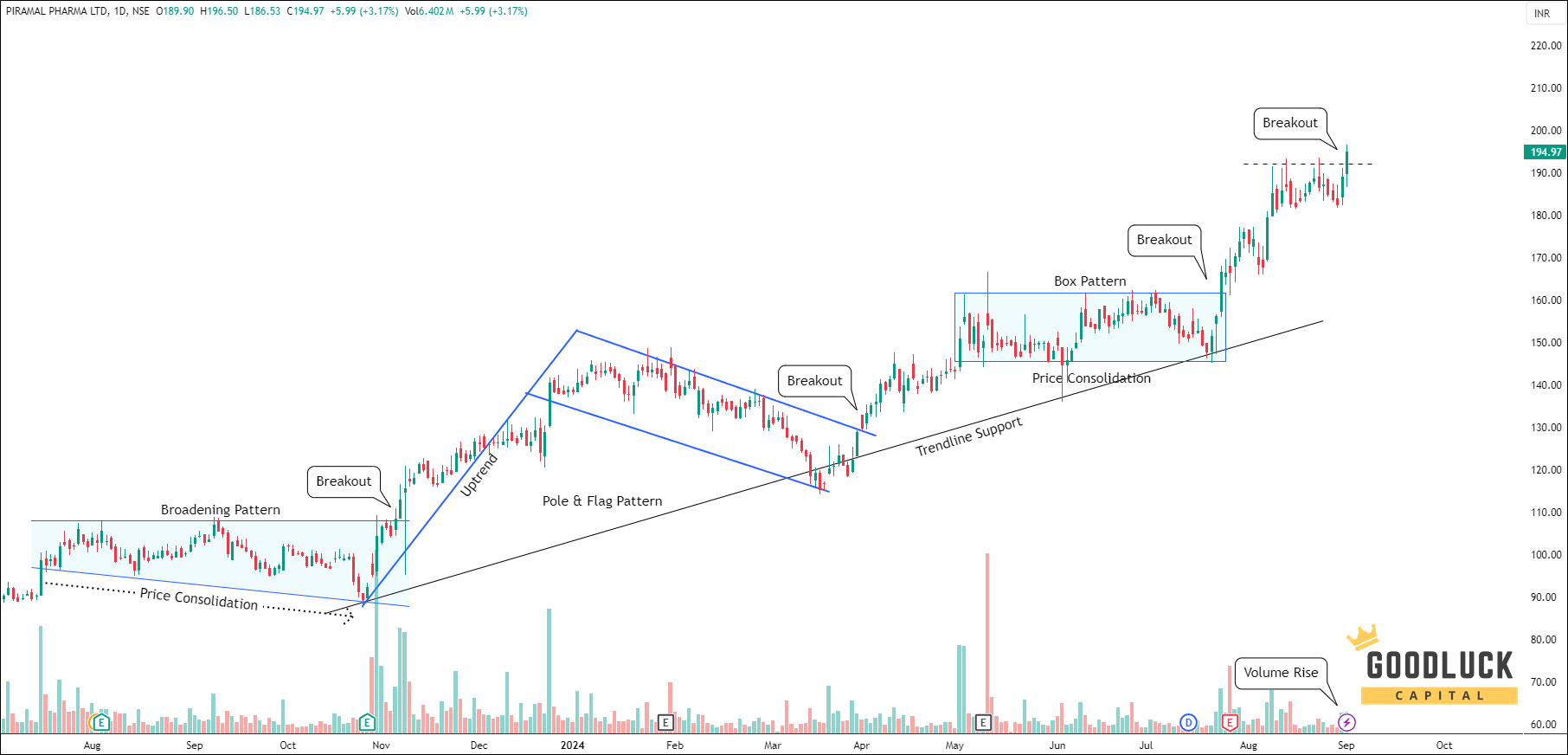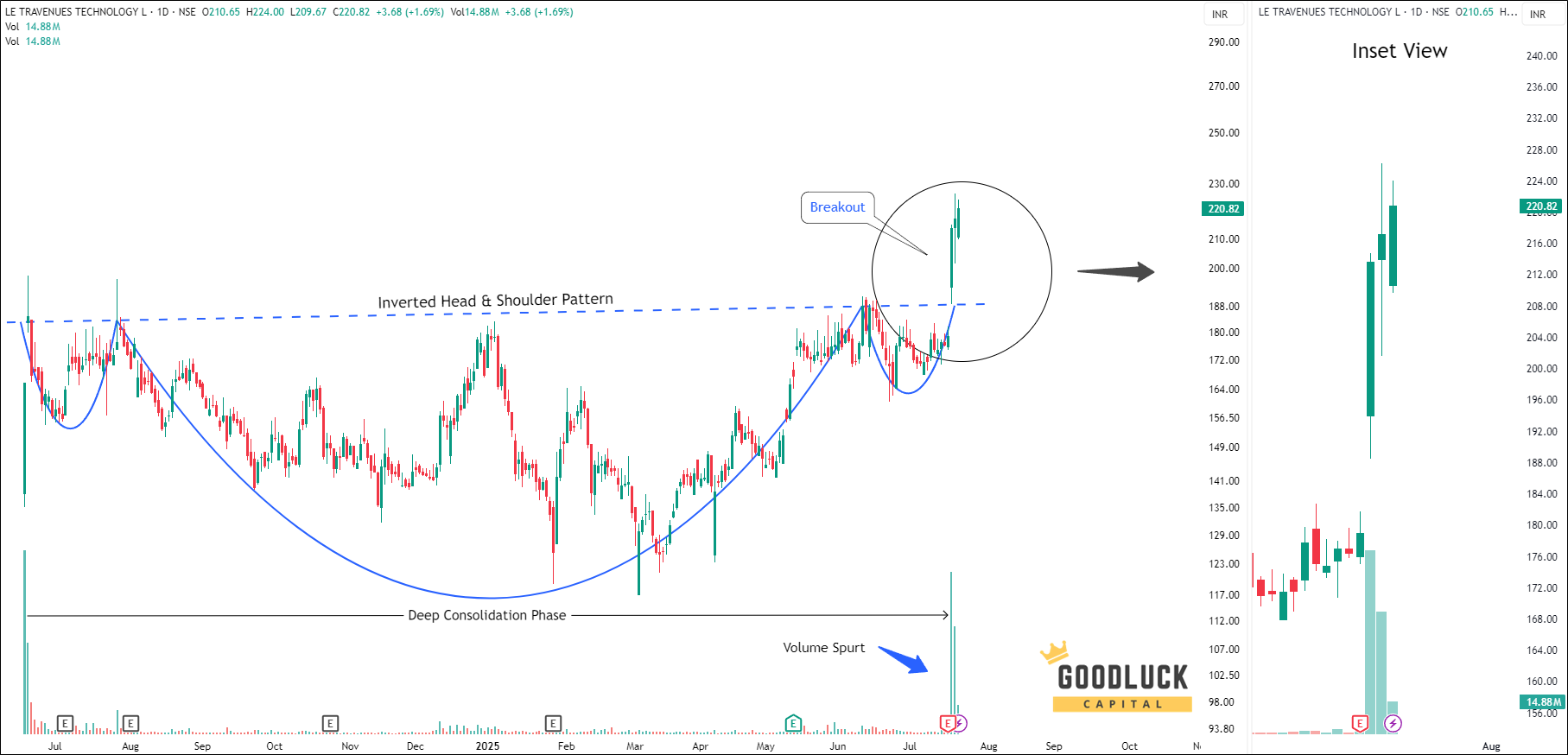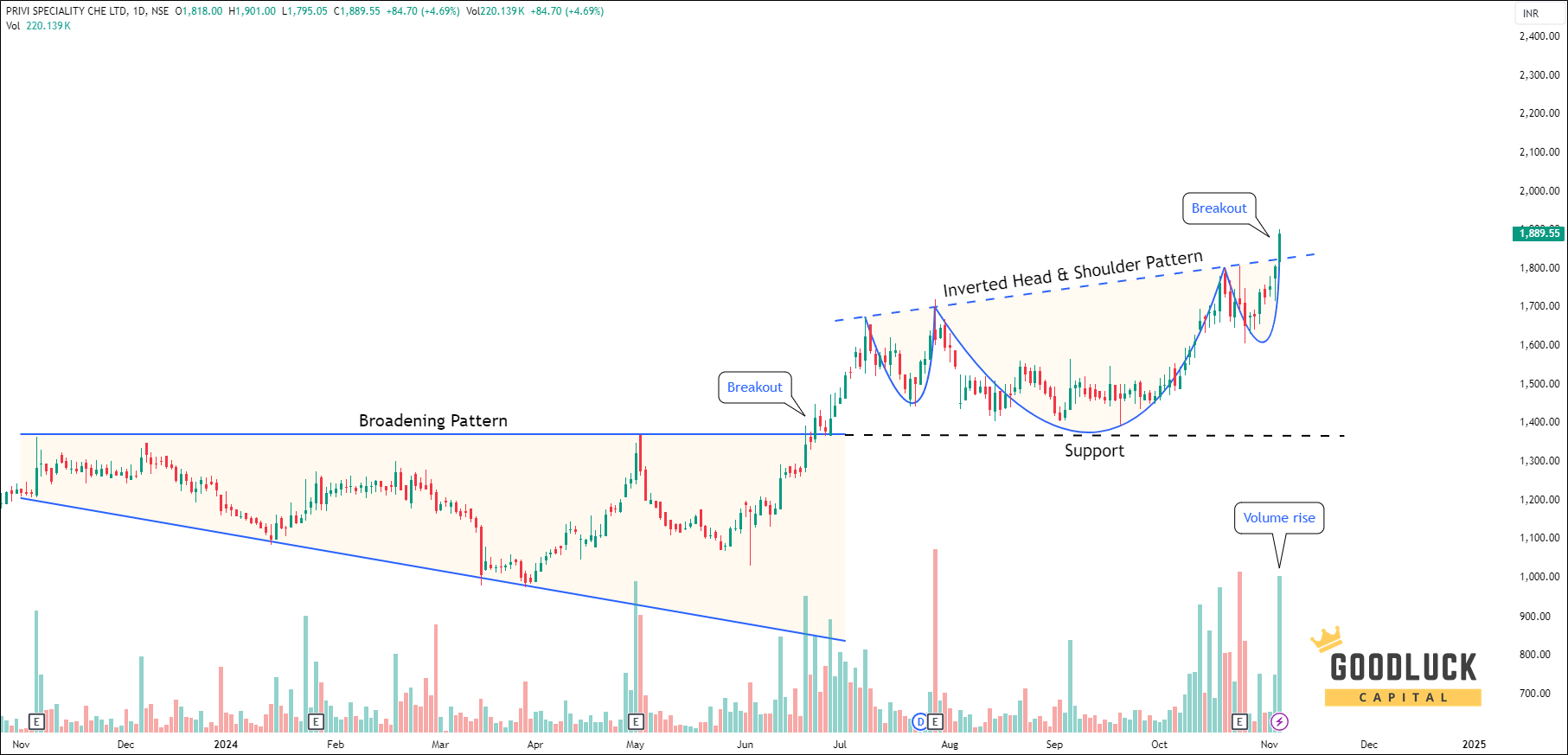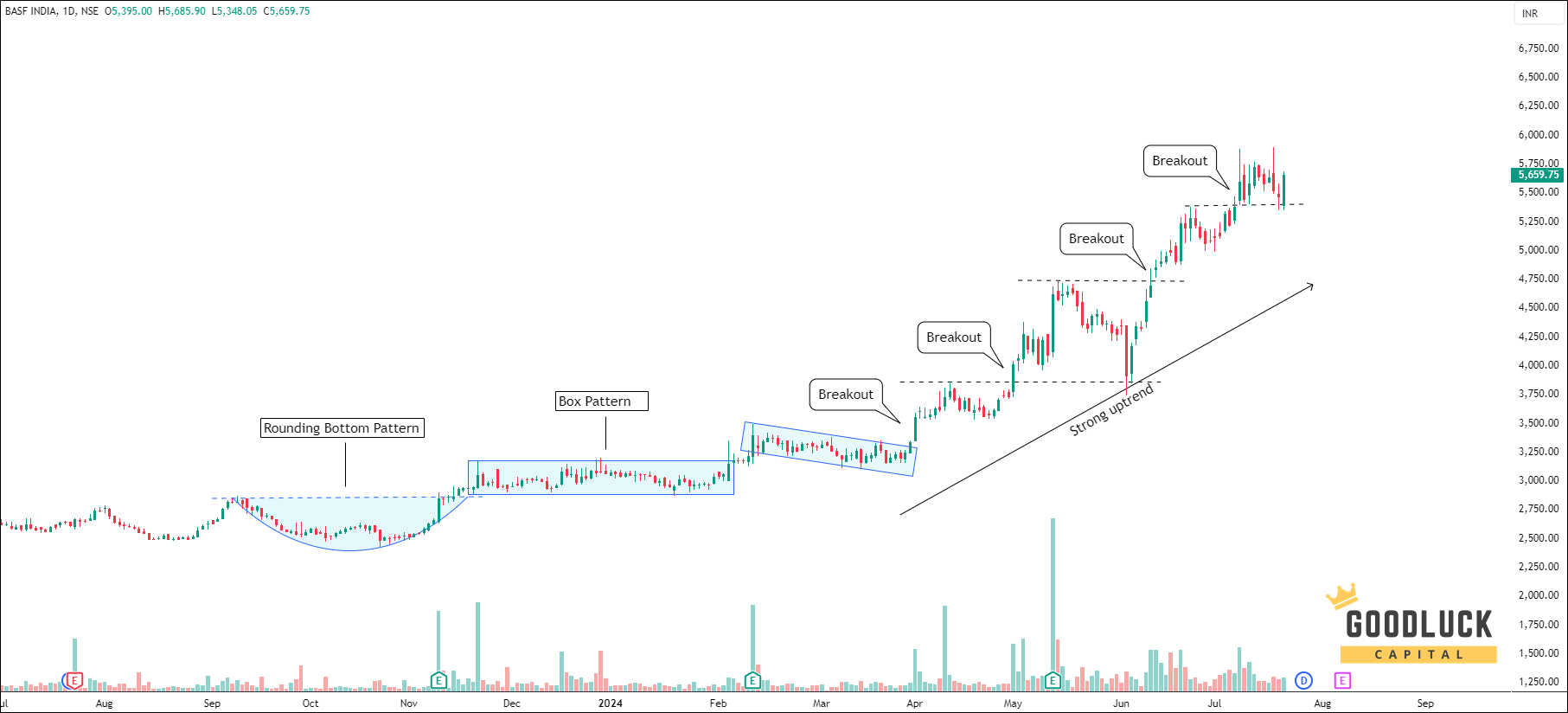
You spot a great stock. The price looks perfect. Your research says it is going to rise. There is just one problem. You only have Rs 25,000 in your account and the opportunity needs Rs 1,00,000.
Do you wait until you save up enough? Or do you let the opportunity pass?
Many investors face this situation when they identify a promising short term trading opportunity but do not have enough capital to buy the desired quantity of shares. This is where Margin Trading Facility (MTF) can become a useful tool, provided you understand both its benefits and its risks.
Margin Trading Facility, or MTF, was created precisely for this situation. It lets you buy more shares than your available cash by borrowing the rest from your broker.
Sounds powerful. It is. But it also comes with real risks that every investor must understand before activating it.
Let us break it down completely, step by step.
What exactly is MTF?
MTF is a SEBI-regulated facility offered by registered stockbrokers in India. It allows you to buy shares by paying only a portion of the total value upfront. Your broker funds the remaining amount and charges you interest on that borrowed money.
Think of it like a home loan but for stocks. A bank gives you a loan to buy a house you cannot fully afford right now. You pay a down payment and the bank covers the rest. With MTF, you pay a margin and the broker covers the rest.
The key difference from a home loan is the speed. MTF happens instantly, the interest clock starts ticking from day one, and the risks are much faster moving.
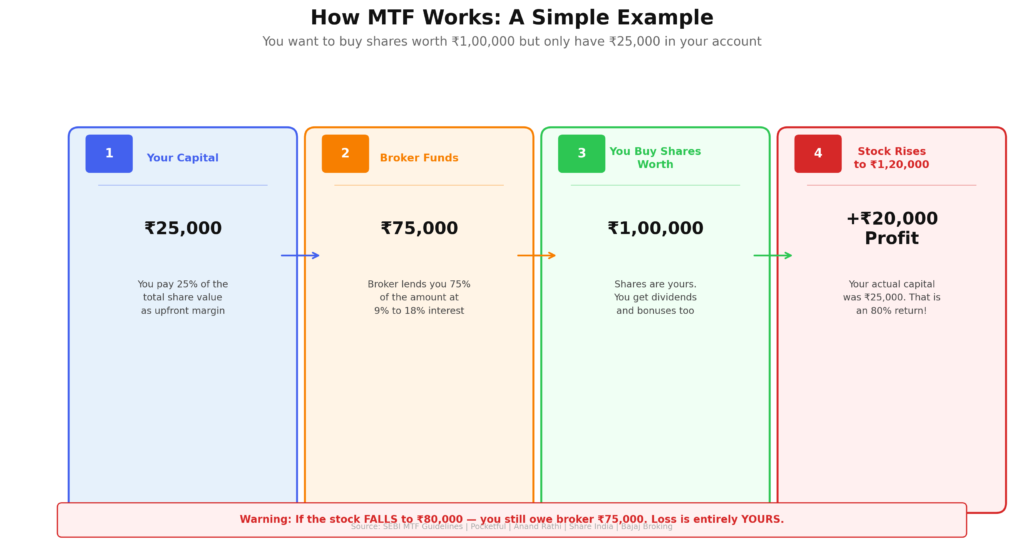
SEBI rules say you must bring in at least 25 percent of the total share value as your upfront margin. The broker can fund up to 75 percent of the remaining amount. So for a Rs 1,00,000 trade, you bring Rs 25,000 and the broker lends you Rs 75,000.
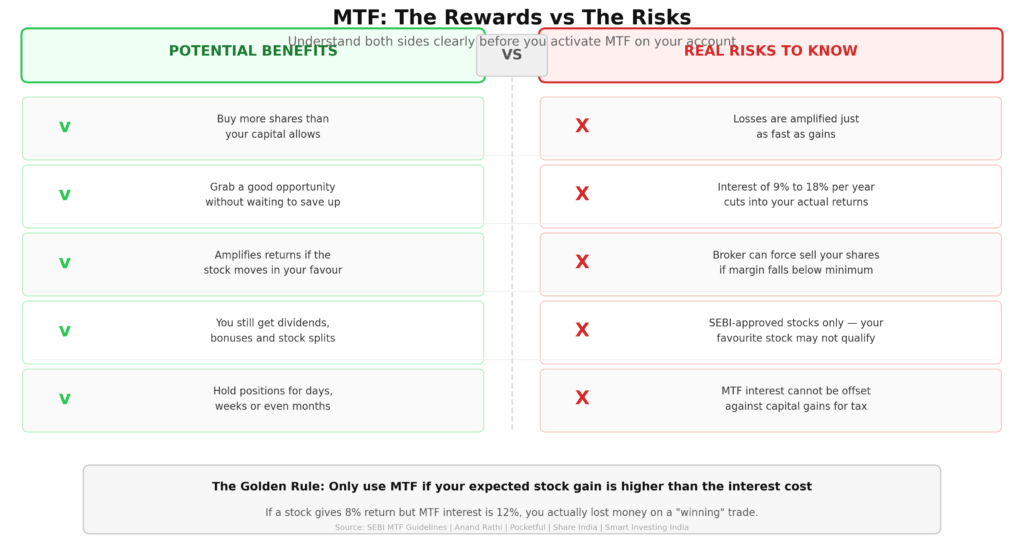
The interest charged on that borrowed amount typically ranges from 9 to 18 percent per year depending on your broker and the product plan you choose.
How does MTF actually work?
Let us walk through a real example so the whole thing becomes crystal clear.
You want to buy 100 shares of a company trading at Rs 1,000 each. Total cost is Rs 1,00,000. But you only have Rs 25,000 in your account.
Without MTF, you can buy only 25 shares.
With MTF, you pay Rs 25,000 as margin. Your broker funds Rs 75,000. You get all 100 shares. The shares sit in your demat account and you own them fully. You are eligible for dividends, bonuses, and stock splits just like any normal shareholder.
Now if the stock rises to Rs 1,200, your 100 shares are worth Rs 1,20,000. You sell, repay the broker Rs 75,000 plus interest, and keep the profit. Your capital was Rs 25,000 but your gain on a Rs 20,000 rise is much larger in percentage terms than if you had only bought 25 shares.
That amplification of returns is the entire appeal of MTF.
How is MTF different from intraday trading?
Many people confuse MTF with intraday trading. They are not the same thing.
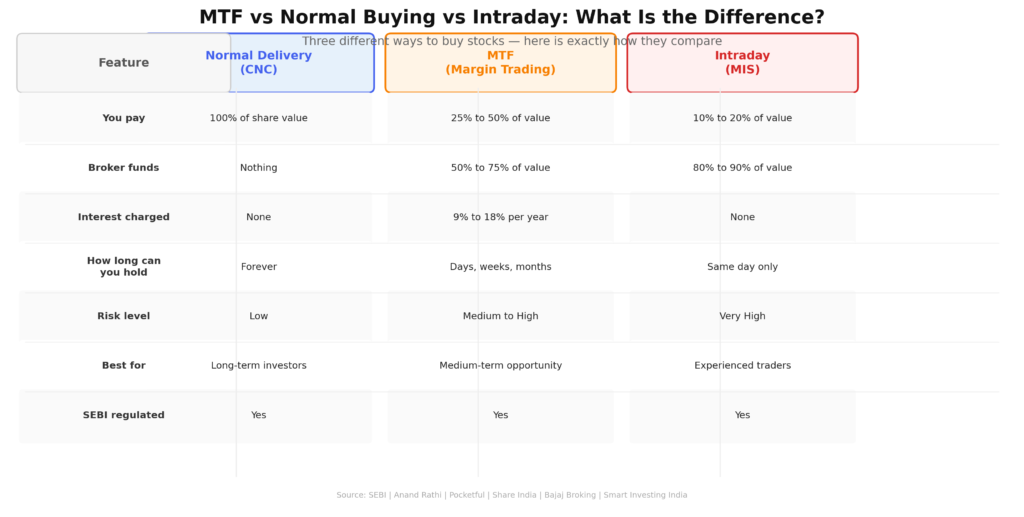
Intraday trading means you buy and sell shares on the same day. You cannot hold positions overnight. The broker gives you very high leverage, sometimes 5 to 10 times your capital, but everything must be squared off before the market closes at 3.30 PM.
MTF is completely different. You can hold your MTF positions for days, weeks, or even months. There is no deadline to sell. The only condition is that you keep paying the interest and maintain the required margin as long as you hold the position.
This makes MTF useful for investors who have a view on a stock over a few weeks rather than just a few hours.
Which stocks can you buy through MTF?
Not every stock is available for MTF. SEBI has approved only Group 1 securities listed on NSE and BSE for the MTF facility. These are stocks that meet specific standards of liquidity and stability. Stocks that are too volatile or thinly traded are excluded.
Each broker also maintains its own approved list which may be smaller than the overall SEBI list. So a stock that is technically eligible may still not be available for MTF on your specific broker’s platform.
You can check your broker’s MTF stock list before placing a trade.
What are the key SEBI rules around MTF?
SEBI has put clear rules in place to protect both investors and brokers.
The minimum margin you must bring is 25 percent of the total trade value. If the value of your shares falls and your margin drops below the required level, your broker will send you a margin call. This means you get a notice to add more funds or collateral immediately.
If you do not top up your margin within the deadline, the broker has the right to forcibly sell your shares to recover the borrowed amount. This can happen even if you do not want to sell. Even if you believe the stock will recover. The broker does not wait.
Since October 2025, SEBI introduced a pledge-based framework for MTF. Shares bought through MTF are pledged electronically with the broker as collateral. This system is more transparent and creates a cleaner audit trail for investors.
The MTF market in India crossed Rs 75,000 crore in total outstanding funding in 2024, reflecting just how widely this facility is now being used across the country.
The real risks you must understand
MTF amplifies everything. Not just gains. Losses too.
If your stock rises 20 percent, your return on actual capital invested is dramatic. But if the stock falls 20 percent, you still owe the broker the full borrowed amount. The loss comes entirely out of your own pocket.
Interest costs add up silently. At 12 percent per year, borrowing Rs 75,000 for 30 days costs you roughly Rs 740 in interest. For 90 days it is over Rs 2,200. If your stock has not moved enough to cover this cost, you are losing money even on a trade that looks flat.
SEBI rules also say that MTF interest cannot be offset against your capital gains for tax purposes. It is treated as a financing cost only.
Who should use MTF and who should not?
MTF is not designed for beginners. It requires you to monitor your portfolio actively, understand margin requirements, and have a clear exit plan before entering the trade.
It works best for investors who have high conviction on a specific stock over the short to medium term, whose expected stock return is meaningfully higher than the interest cost, and who can absorb the downside if the trade does not go as planned.
It is not suitable for people investing their emergency savings, for those who cannot track their positions daily, or for anyone who does not fully understand how leverage works.
Because MTF allows you to hold positions for days or even weeks, many experienced traders use it for swing trading in share market in India rather than for intraday trading. However, leverage should only be used when you have a well-researched trading plan, proper risk management, and the discipline to handle margin calls if the market moves against you.
A simple closing thought
MTF is like a powerful tool. In the right hands with the right situation, it can significantly amplify returns. In the wrong hands or the wrong market conditions, it can wipe out your capital faster than you expect.
The simplest way to think about it is this. Before using MTF, ask yourself one honest question. Am I confident enough in this stock that my expected gain will comfortably beat the interest I will pay the broker?
If the answer is clearly yes, MTF can be a useful addition to your investing toolkit. If there is any doubt, your own capital is always the safer bet.